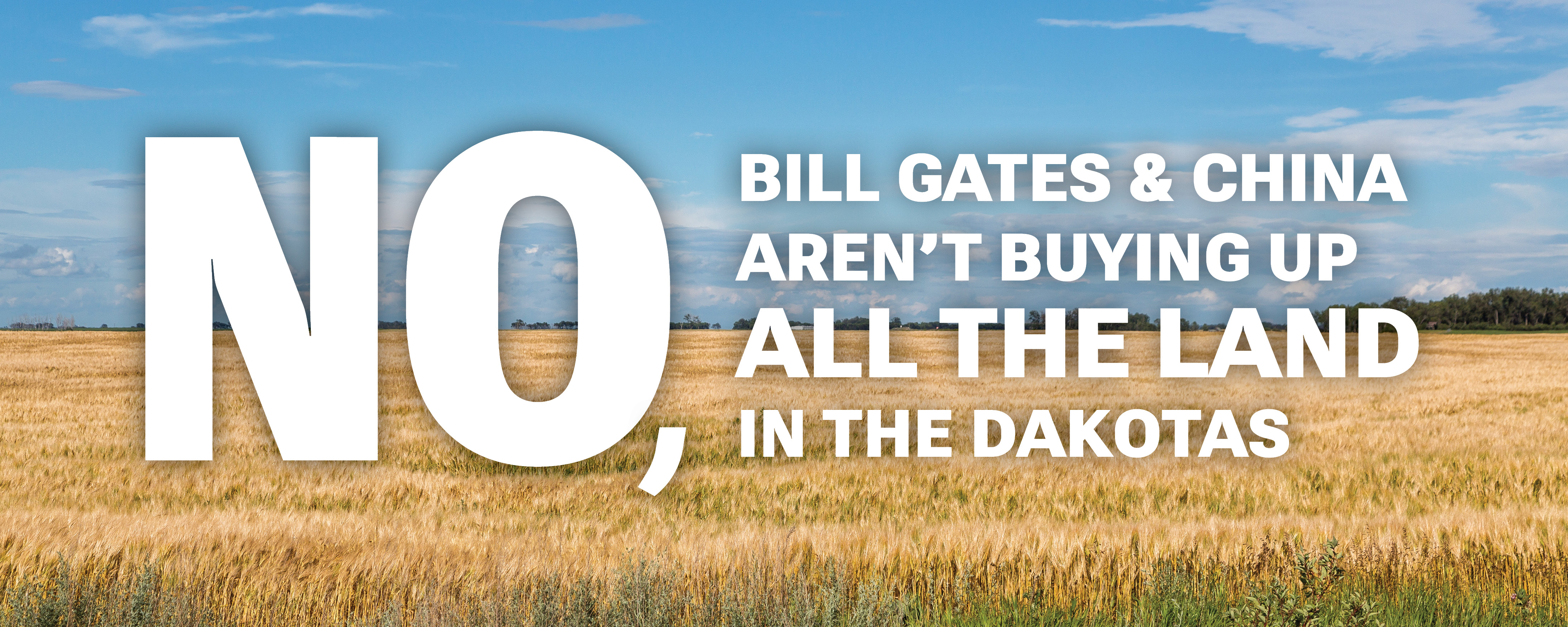
If you've been paying attention to headlines or social media chatter lately, you might be led to believe that Bill Gates, China, or some other distant entity is buying up vast amounts of farmland in the Dakotas. The narrative is compelling and filled with intrigue and concern. In fact, it’s a topic often brought up by land sellers we work with. But this perception doesn’t align with the reality on the ground here in the heart of the Midwest.
As is often the case with headlines, the truth is much less sensational, though far more important to our rural communities and the future of agriculture. At most land auctions we hold, it’s local farmers and wealthy individuals with deep ties to rural areas who are walking away with the deeds.
So, who’s really buying the land?
Farmers
Farmers still account for a significant portion of land purchases. For example, I recently went back and counted out of curiosity. Out of the last 19 tracts of land we sold at auction in the Dakotas and Minnesota, farmers purchased 14 of those tracts, while “investors” purchased five. I’d bet if you sampled our other markets (Iowa, Illinois, Central, and Southern Minnesota), you’d find similar results.
Farmers understand the land better than anyone else, and they know the value it holds—not just economically, but culturally and historically. Land is everything. That’s the name of the game and where all the wealth in farming lies. Farm for a lifetime, and hopefully, you’ll have some land paid for by the end of your career. Many of these buyers live and breathe agriculture, with families that have been farming for generations. The drive to expand their operations or pass on a thriving farm to the next generation is a powerful motivator.
Investors
But it’s not just the farmers. We also see interest from wealthy individuals who might not farm the land themselves but have a strong connection to rural areas. Some have grown up in these communities and want to maintain their ties to the land. Others see it as a stable investment, something that holds its value over time and offers a sense of security. These buyers are often local or have some historical connection to the area, rather than being faceless corporate entities from out of state or out of the country. Most of our investor buyers fall into this category.
Larger investor groups do exist and are active in the land market. And yes, some have ties to wealthy individuals like George Soros, Bill Gates, and China. These buyers are highly sophisticated, number-driven folks with a deep understanding of the economies of production agriculture. Some are funds that have pooled large amounts of cash from individuals to buy farms. However, these entities often have a difficult time operating in North Dakota in particular because of our anti-corporate farming laws. Most want to buy large swaths of land at a time and often shy away from auction sales with quarters, halves, and even sections. They typically seek out large contiguous blocks of land where economies of scale and ease of operation are important. Auction sales offering this sort of opportunity are rare. Even so, when they do come up, it’s difficult for these buyers to compete with the much more emotionally driven farmer buyers in a multi-tract setting. As a result, most of these buyers prefer to purchase through private treaty transactions, where willing sellers sell directly to them.
The Local Auction Scene
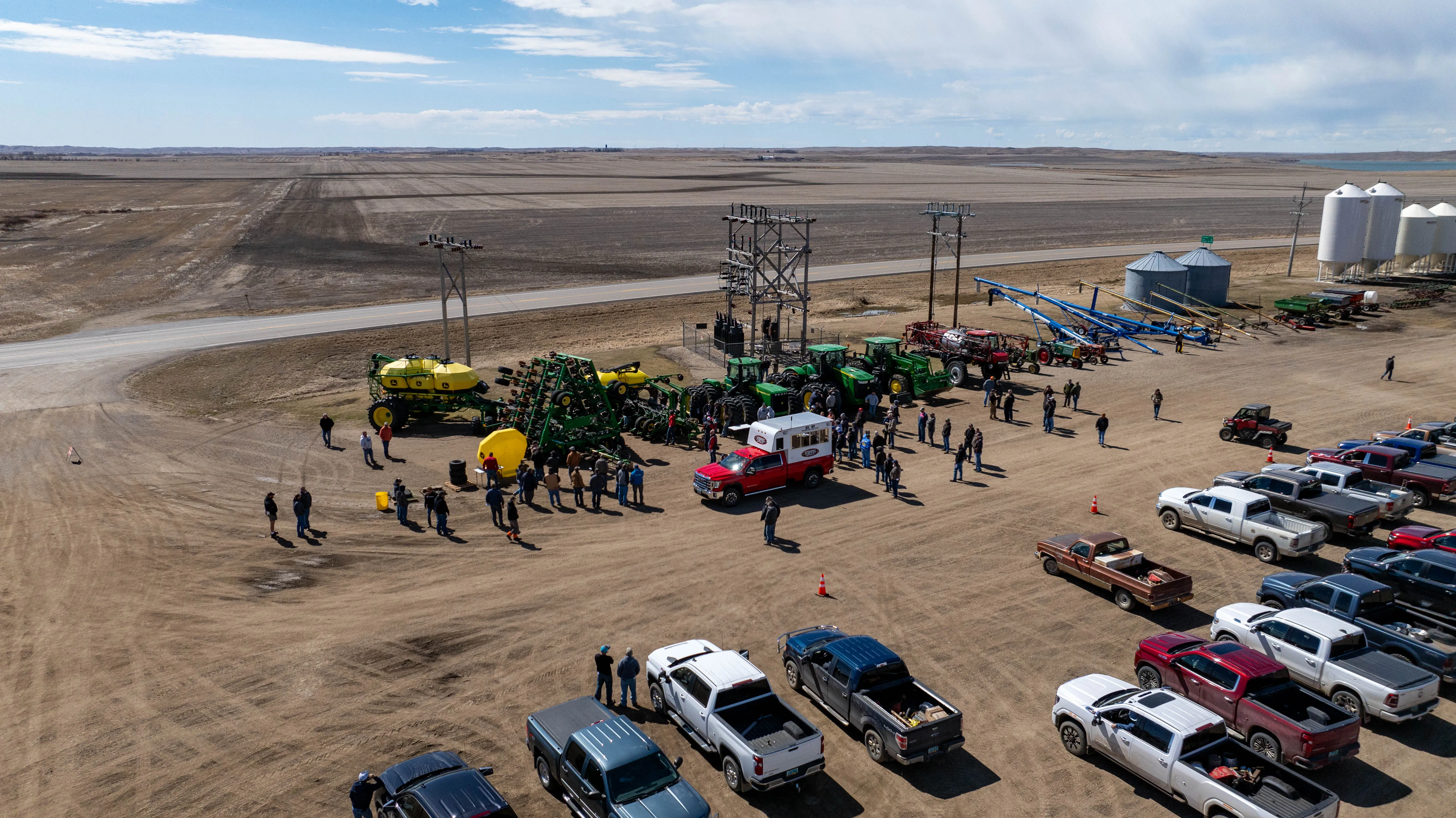
At our auctions, it’s clear that most bids come from local farmers, their neighbors, and individuals who care deeply about the land’s future. These bidders aren’t just buying land—they’re investing in their communities and in the long-term health of our region’s agricultural economy. While there is some truth to the idea that foreign investors or billionaires are purchasing land, it’s overblown and largely exaggerated in my view.
Sure, there have been isolated cases where large entities have purchased land in the region, but these are the exceptions, not the rule. The data consistently shows that local buyers are the dominant force in the market, and I don’t see that changing anytime soon.
Max Steffes
Director of Real Estate